
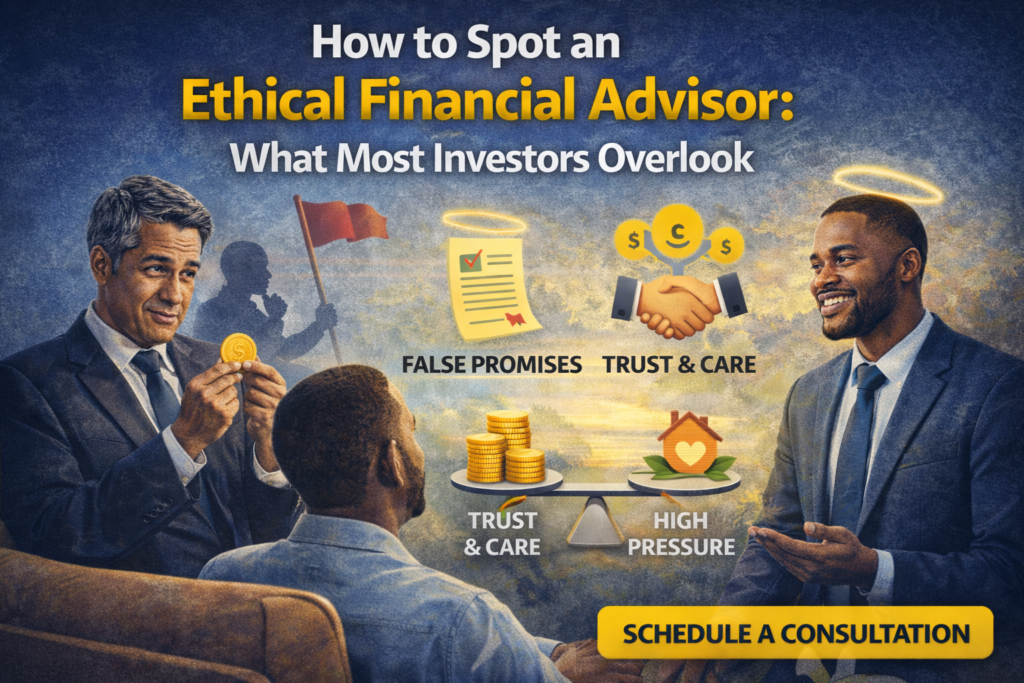
How to Spot an Ethical Financial Advisor: What Most Investors Overlook
Choosing a financial advisor is one of the most important decisions you will ever make. Yet too many people base that decision on surface-level factors like credentials, office appearance, or how polished the presentation is.
But intelligence alone does not make an advisor trustworthy.
In today’s financial industry, ethics, character, and emotional intelligence matter just as much — if not more — than technical knowledge. And unfortunately, many investors have experienced what it feels like to sit across from an advisor who sees them as a dollar sign instead of a person.
This article will help you understand what truly makes a financial advisor ethical, how to recognize red flags, and what standards you should expect when trusting someone with your financial future.
Why Trust in Financial Advisors Has Been Broken
According to Investopedia, most investors have historically struggled to trust the financial advisory industry. Advisors are regulated by organizations such as FINRA and the SEC, but regulation alone does not guarantee ethical behavior.
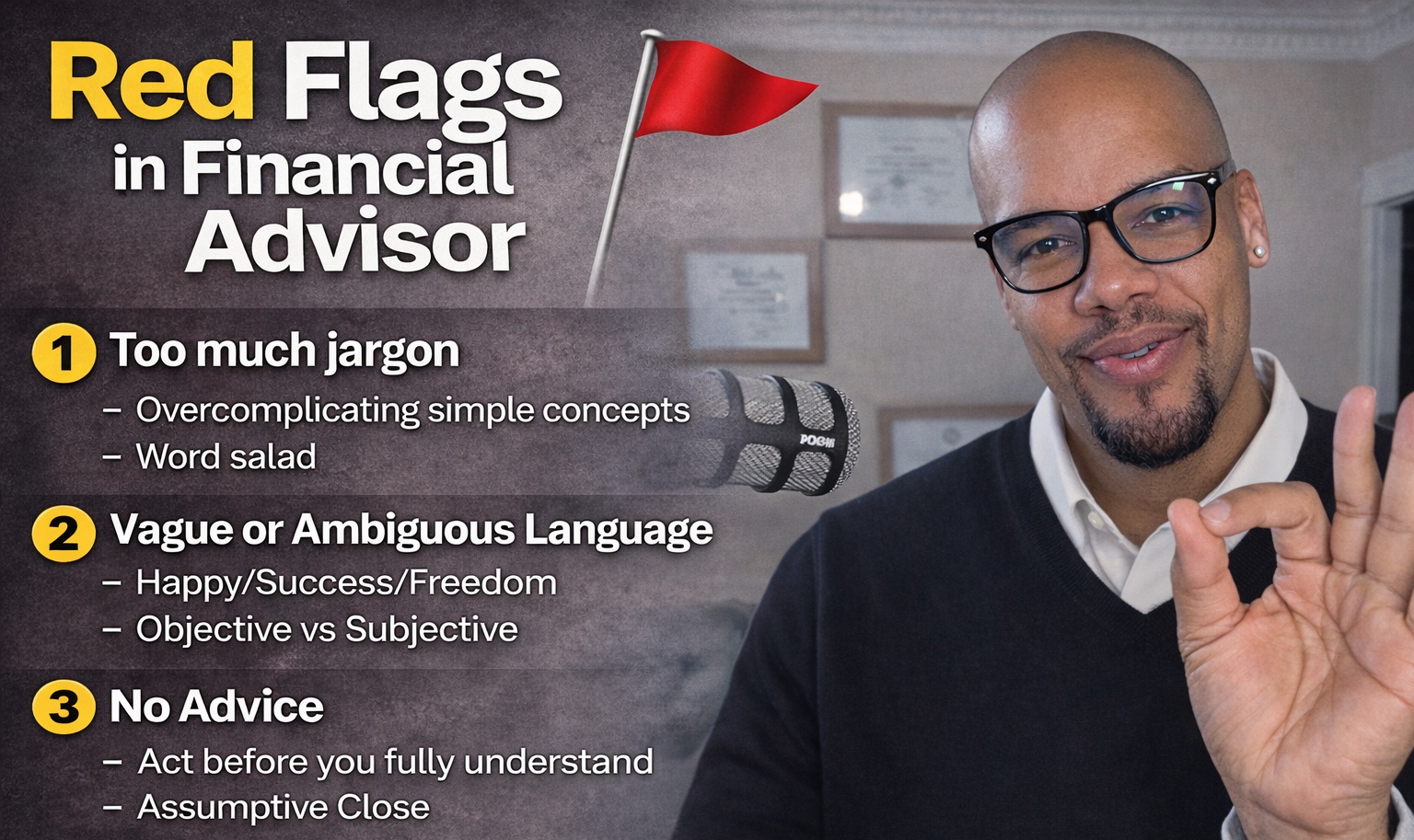
Unethical financial advisors often show warning signs such as:
- Inconsistent reporting
- Aggressive product pushing
- Guaranteeing future results
- Avoiding difficult questions
Ethical advisors, on the other hand, prioritize:
- Understanding your personal history
- Educating you on unfamiliar topics
- Planning for your future and legacy
The difference is not always obvious at first — but it becomes clear over time.
Beyond IQ: Why Emotional Intelligence Matters in Financial Planning
Most advisors sitting across from you are intelligent. They have passed exams, earned licenses, and understand financial concepts.
But investing is not just a numbers game. It is emotional. It is personal. It is deeply connected to your fears, your hopes, your family, and your future.
An advisor may help you earn 2% more on paper — but if every conversation leaves you stressed, unheard, or uncomfortable, that relationship is not healthy.
That is where emotional intelligence (EQ) comes in.
Ethical advisors:
- Listen more than they talk
- Make you feel safe asking questions
- Respect your concerns
- Never make you feel inferior or pressured
If you dread talking to your advisor, something is wrong.
Key Signs of an Ethical Financial Advisor
1. They Know What They Don’t Know
No advisor knows everything. Finance is too broad.
Ethical advisors are honest about their limitations. If a topic is outside their expertise — such as advanced tax planning, charitable strategies, or complex estate issues — they will tell you and either research it or refer you to someone who specializes in that area.
Be cautious of advisors who pretend to have all the answers.
Humility is a strength, not a weakness.
2. They Are Lifetime Learners
The financial world changes constantly. Laws change. Markets change. Strategies evolve.
A great advisor is always learning.
Ask your advisor:
“What’s the last thing you learned?”
An ethical advisor will be excited to share new insights, updates, or research. They are not stuck in the past — they are sharpening their skills for your benefit.
3. They Have a Strong Ethical Network
Advisors are influenced by the company they keep.
Ask:
- What organizations are you part of?
- What professional groups do you engage with?
- Who do you learn from?
For example, being part of faith-based or ethics-driven organizations reflects a commitment to values, not just profits.
The environment an advisor surrounds themselves with shapes the advice you receive.
4. They Distinguish Between Fact and Opinion
Ethical advisors are clear about what is:
- Verifiable fact
- Professional opinion
- Speculation or projection
For example:
- “Inflation was 9.1% last month” is fact.
- “Inflation will be 11% next year” is opinion.
An ethical advisor makes that distinction clear so you can make informed decisions — not emotional ones.
5. They Are Careful With Framing
How information is presented matters.
Two statements can be technically true and emotionally very different:
- “There is a 10% chance of failure.”
- “There is a 90% chance of success.”
Ethical advisors present information objectively. They do not manipulate emotions through fear or false optimism. They give you the full picture and allow you to decide.
That is respect.
6. They Go Beyond the Letter of the Law
Ethical advisors do not just ask:
“Is this legal?”
They ask:
“Is this right?”
They avoid gray areas.
They avoid conflicts of interest.
They avoid strategies that benefit them more than you.
They operate in the spirit of the law, not just the minimum requirement.
Why Ethics Matter More Than Performance
Anyone can show returns.
Anyone can show charts.
Anyone can sell a product.
But ethics determine:
- Whether advice is honest
- Whether recommendations are objective
- Whether your interests come first
Performance without ethics is dangerous.
Because money gained through manipulation, pressure, or deception always comes at a cost.
Christian Perspective: Rich and Righteous
As Christian investors, we do not separate faith from finances.
The Bible speaks about:
- Stewardship
- Debt
- Legacy
- Wisdom
- Self-control
In 1 Corinthians 6:12 it says:
“All things are lawful for me, but not all things are helpful… I will not be enslaved by anything.”
This applies to money as much as anything else.
We are to be masters over our wealth — not slaves to it.
That is why ethics matter.
That is why righteousness matters.
That is why character matters.
The goal is not just to be rich — but to be rich and righteous.
How to Evaluate Your Current Advisor
Ask yourself:
- Do they listen to me?
- Do they explain things clearly?
- Do they pressure me?
- Do they admit when they don’t know something?
- Do they care about my values?
- Do I trust them?
And most importantly:
Do I have peace when I work with them?
God has given you discernment.
Trust it.
Final Thoughts
The financial industry is changing. And it needs to.
More transparency.
More ethics.
More humility.
More integrity.
You deserve an advisor who sees you as a person — not a paycheck.
And with the right knowledge, you can spot the difference.
About Financial Advisors Say The Darndest Things
Financial Advisors Say The Darndest Things exists to challenge industry nonsense, expose unethical practices, and bring financial truth through a biblical lens.
The mission is simple:
Help you become rich and righteous.
If you are unsure about your current advisor or feel something is “off,” trust that instinct.
Schedule a consultation and get clarity.
Because your future deserves integrity, not sales tactics.
https://calendly.com/abridgewaywm/consultation
About the Author
A.B. Ridgeway, EA, MBA, CDFA® CPWA® is the founder of A.B. Ridgeway Wealth Management and host of The Ridgeway Report. He specializes in helping retirees and pre-retirees create reliable income, invest with clarity, and make confident financial decisions.
Join our Newsletter and receive our free 19-page e-book “4 Financial Principles Every Christian Should Know”
Click Here To Get Your Free Gift
About The Ridgeway Report:
As Christians, we were taught to be good stewards over our tithing and giving to the less fortunate. But when it came to our personal finances and investing we were left clueless on what the Bible says. What does the Bible say about managing debt, leaving a legacy, investing, and planning for your retirement? Mr. Christian Finance answers these and many other questions because we want to teach you how to become rich and righteous!
Meet A.B. Ridgeway:

A.B. Ridgeway, MBA, CPWA®️ (info@abrwealthmanagement.com) is the owner and Christian Financial Advisor with A.B. Ridgeway Wealth Management. With a decade in the finance industry, his goal is to give believers clarity around the most confusing topic in the Bible, money, and tithing. A.B. Ridgeway helps tithing Christians become cheerful givers but unlocking their money-making potential, so they can prosper and be the great stewards of the wealth God has entrusted them with.
*Disclaimer: This communication is not intended as an offer or solicitation to buy, hold or sell any financial instrument or investment advisory services. Any information provided has been obtained from sources considered reliable, but we do not guarantee the accuracy or the completeness of any description of securities, markets or developments mentioned. This is strictly for information purposes. We recommend you speak with a professional financial advisor.
*Some elements in this blog was created, restructured, edited or summarized by AI and may have altered from the original content. Warning: There may be errors that were creating during this transition that were not in the original content. Please double check all information.