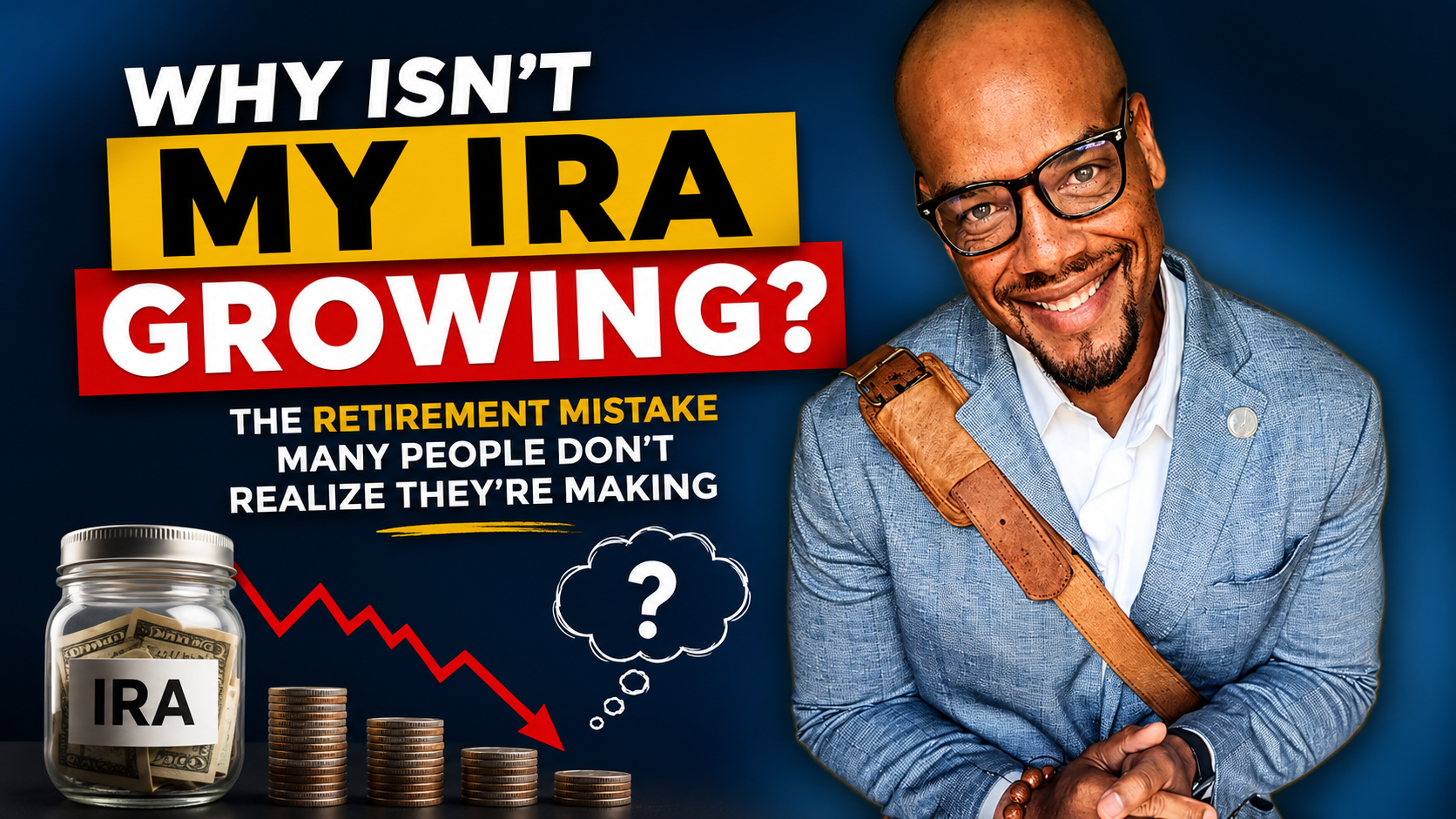

Today we’re talking about something that hits investors right in the emotions: current events, market hype, and the temptation to chase the next big thing. Many clients are looking for the next Wolf of Wall Street or the newest “stock guru” who promises a market edge with short-term, aggressive moves. The glitz, the glamour, and the promise of quick results can feel very convincing.
But here’s the real question: Is switching from long-term, passive investing to short-term, aggressive strategies actually a good idea? And if you do switch, will it truly get you closer to your goals faster — or will it increase the odds of costly mistakes?
In this blog, we’ll walk through practical ways to make investment decisions that make sense not just today, but for the long term. We’ll cover:
- How to choose a strategy with a track record
- How to avoid overanalysis and paralysis
- How to recognize confirmation bias
- Why patience and discipline are still undefeated
Because if you’re here, you’re probably not looking for a “hot stock pick” you can sell tomorrow. You want proven, repeatable strategies you can use for years.
1) Start With a Strategy That Has a Long-Term Record
One of the simplest and most effective filters in investing is this:
Look for strategies and investments with a long-term performance history.
When you research funds, indexes, or investment approaches, you can usually find annualized returns shown across multiple time frames:
- 3 months, 6 months, 9 months
- Year-to-date (YTD)
- 1-year
- 3-year
- 5-year
- 10-year
Why does this matter?
Because the longer the performance history, the more data you have to evaluate how that strategy behaved across different market environments. It includes more “real world” moments that can create outliers — like:
- elections and major political shifts
- new legislation
- national disasters (think 9/11, major hurricanes)
- global instability and war
- pandemics and economic shutdowns
A strategy that has survived multiple cycles is more trustworthy than one that looks good for a few months on social media.
Watch Out for “Cherry-Picked” Results
A major reason investors get misled is because they see a screenshot of one year of amazing returns — and assume that’s normal. It’s not.
Short time frames can exaggerate results because they may reflect a unique event, a temporary trend, or a lucky entry point.
Long-term data doesn’t guarantee future performance, but it helps you avoid being fooled by “highlight reels.”
2) Don’t Get Stuck in Overanalysis Paralysis
Here’s a trap many intelligent people fall into:
They spend months researching “the perfect investment,” reading endless articles, comparing dozens of funds, and tracking charts… and never actually make a decision.
This is called overanalysis paralysis — when too many choices and too much information makes you freeze. Instead of choosing something and moving forward, you delay because you don’t want to make the wrong decision.
And here’s the irony:
Not choosing is still a choice.
And often, it’s the most expensive one.
In the age of Google, information is everywhere. The goal isn’t to find more information — it’s to ask better questions.
3) Ask Questions That Qualify Your Strategy (And Eliminate Bad Options)
Instead of reading eight pages about the P/E ratio and earnings per share of 50 different funds, start with decision-driving questions like:
- How long do I need this money to last?
- What return do I realistically need each year to reach my goals?
- Can I handle volatility without panicking?
- Am I truly okay with the risk I’m taking?
These questions help you qualify your decisions.
What Does “Qualifying Your Decisions” Mean?
It means you eliminate choices based on criteria that matter to you.
If a fund, strategy, or investment approach doesn’t meet your requirements, you remove it from consideration. That reduces your options and improves decision quality.
Here it is in plain terms:
A good strategy is less about finding “the best investment.”
It’s about finding the best fit for your timeline, goals, and emotional tolerance.
When your criteria is clear, decision-making gets easier and your confidence rises.
4) Beware of Confirmation Bias (It Can Quietly Destroy Your Plan)
One of the biggest threats to good investing isn’t the market — it’s your mind.
Confirmation bias is when you already believe something, and you only pay attention to information that confirms what you believe — while ignoring evidence that challenges it.
It’s defined as:
A tendency to interpret new evidence as confirmation of one’s existing beliefs or theories.
That becomes dangerous in investing because if you ignore information that exposes flaws in your strategy, you increase your risk of failure.
Example:
If you’re convinced a stock, crypto, or strategy is “guaranteed,” you may only watch videos and read posts that agree with you. Meanwhile, warnings and risks get filtered out.
That’s how people become emotionally attached to bad decisions.
The Fix: Stay Curious, Not Committed to Being Right
A healthy investor is always willing to review information objectively.
But here’s the key:
Adapting your strategy doesn’t mean abandoning your strategy.
Good planning allows you to evolve without panicking. You can make adjustments while keeping the core structure aligned with your long-term goals.
5) Why You Must Understand What Your Advisor Is Doing
I need to say this clearly:
If you have a financial advisor and you don’t understand what they’re doing, that’s a problem.
I’ve heard clients say:
“I don’t know what my advisor is doing… but I think he’s doing a good job.”
That is a dangerous position to be in, because it increases:
- your risk of fraud
- your risk of avoidable losses
- your risk of being misaligned with your true goals
- your risk of your advisor missing major life changes that should impact your plan
Your advisor should be able to explain your strategy in plain English.
And you should be able to explain it back.
6) Patience and Discipline: The Unsexy Keys to Wealth
Here’s the truth that doesn’t sell well online:
The strategy you choose won’t always be the best performer every year.
Sometimes you’ll see other people “win” with a lucky stock pick. And you might feel behind. Other times, you’ll experience a downturn and start thinking investing is a scam.
Both extremes are emotional reactions — and neither represents the long-term reality.
When you constantly second-guess your plan, shift strategies, rebuild portfolios, and chase trends, you often create the very losses you’re trying to avoid.
Patience Makes Goals Affordable
I said this in another episode:
With patience, you can afford anything.
Even saving $10 per day adds up to $36,500 in 10 years — and that’s before we even consider compounding and investment returns.
Wealth isn’t always built by dramatic moves.
It’s built by consistent behavior over time.
Key Takeaways: A Strategy You Can Be Proud Of
If you want to build a financial plan that lasts, remember these principles:
✅ Develop a long-term strategy with a track record
✅ Avoid overanalysis paralysis — ask better questions instead
✅ Be objective and watch for confirmation bias (we all have it)
✅ Use patience and discipline to stay consistent
The market will always have noise.
But the investor who wins over time is the one who keeps their plan simple, intentional, and aligned with their life.
Need Help Building an Investment Strategy That Fits Your Goals?
Are you looking for an investment advisor?
Do you need help understanding your finances?
Do you want a plan that aligns with your values and helps you build wealth with clarity?
Call us at 337-414-3686 or book a free consultation at www.abbrwealthmanagement.com
And if you want quick financial tips in one place, join our Facebook group — I post new content there first.
If this message helped you, subscribe so you don’t miss the next episode. Links are in the description below.
About the Author
A.B. Ridgeway, CPWA® is the founder of A.B. Ridgeway Wealth Management and host of The Ridgeway Report. He specializes in helping retirees and pre-retirees create reliable income, invest with clarity, and make confident financial decisions.
Join our Newsletter and receive our free 19-page e-book “4 Financial Principles Every Christian Should Know”
Click Here To Get Your Free Gift
About The Ridgeway Report:
As Christians, we were taught to be good stewards over our tithing and giving to the less fortunate. But when it came to our personal finances and investing we were left clueless on what the Bible says. What does the Bible say about managing debt, leaving a legacy, investing, and planning for your retirement? Mr. Christian Finance answers these and many other questions because we want to teach you how to become rich and righteous!
Meet A.B. Ridgeway:

A.B. Ridgeway, MBA, CPWA®️ (info@abrwealthmanagement.com) is the owner and Christian Financial Advisor with A.B. Ridgeway Wealth Management. With a decade in the finance industry, his goal is to give believers clarity around the most confusing topic in the Bible, money, and tithing. A.B. Ridgeway helps tithing Christians become cheerful givers but unlocking their money-making potential, so they can prosper and be the great stewards of the wealth God has entrusted them with.
*Disclaimer: This communication is not intended as an offer or solicitation to buy, hold or sell any financial instrument or investment advisory services. Any information provided has been obtained from sources considered reliable, but we do not guarantee the accuracy or the completeness of any description of securities, markets or developments mentioned. This is strictly for information purposes. We recommend you speak with a professional financial advisor.
*Some elements in this blog was created, restructured, edited or summarized by AI and may have altered from the original content. Warning: There may be errors that were creating during this transition that were not in the original content. Please double check all information.