
When you leave a job, you pack up your desk.
You turn in your badge.
You lose your email, your access, and your business cards.
And for many Americans… you leave your money.
It sounds crazy, but it happens every day.
People work for 5, 10, 15, even 20 years at a company, move on to the next chapter of their life, and never properly manage the 401k they left behind. They don’t know what it’s invested in. They don’t know how to access it. And they don’t realize the risks they’re taking.
In this article, I’m going to walk you through the three biggest retirement mistakes new investors make with their 401k—and how to avoid them.
Mistake #1: Leaving the 401k Unmanaged
This is the most common mistake I see.
People change jobs or retire and simply leave their 401k where it is. They assume:
- It’s fine
- It’s safe
- Someone is watching it
But here’s the truth: your employer does not care.
As long as they’re still managing the plan, they’re still getting paid. They are not adjusting your investments based on your life. They are not calling you when you need money. They are not making sure your strategy matches your goals.
Why This Is a Problem
When your account is unmanaged:
- You don’t know what you’re invested in
- You react slowly to market changes
- Withdrawals can take days or weeks
- Paperwork issues can delay access to your own money
And if there is an emergency, every day matters.
Leaving your 401k unmanaged is not “set it and forget it.”
It’s set it and ignore it.
And that can be very costly.
Mistake #2: Not Understanding Taxes and Withdrawal Rules
This is where people really get hurt.
Many Americans do not understand:
- The tax consequences of 401k withdrawals
- The penalties for early withdrawals
- Or how much they actually owe when they take money out
The 59.5 Rule
If you are under 59½, withdrawals may be subject to:
- Ordinary income taxes
- Plus a 10% early withdrawal penalty
So if you take out $100,000:
- You could lose $10,000 immediately in penalties
- Plus a large portion in taxes
Now imagine taking out $1,000,000 incorrectly.
That’s a $100,000 penalty… before taxes.
The Huge Tax Bill Shock
I’ve seen people say:
“This is my money. I’m taking it out and putting it in my savings account so I know it’s safe.”
And the IRS says:
“Great. Now pay taxes on all of it.”
If you pull out $2 million in one year, that entire amount is taxable income.
That can mean losing hundreds of thousands of dollars simply because you didn’t know the rules.
That’s not a scam.
That’s not unfair.
That’s lack of planning.
Mistake #3: Not Knowing Your Rollover Options
When you leave a job, you generally have two main options:
- Direct rollover
- Indirect rollover
If you don’t understand the difference, that’s normal. You’re not in finance. You’re a doctor, a lawyer, an engineer, a business owner.
That’s why financial advisors exist.
Bad Paperwork = Big Problems
One of the biggest issues I see is bad paperwork.
Checking the wrong box.
Using the wrong custodian.
Missing a signature.
Choosing the wrong rollover type.
These mistakes can:
- Delay your money
- Trigger taxes
- Trigger penalties
- Or force you to start the process over
And once again… time matters.
Bonus Mistake: Target Date Funds Without a Strategy
Many people invest in target date funds because they are marketed as “easy.”
Set it and forget it.
They automatically rebalance based on your age.
But here’s the problem:
They are based on your age… not you.
You might:
- Want to stay more aggressive
- Prefer to be more conservative
- Or fall somewhere in the middle
Target date funds do not account for:
- Your risk tolerance
- Your income needs
- Your overall financial picture
They make decisions for you—whether they fit your situation or not.
Quick Summary of the 3 Biggest 401k Mistakes
- Leaving the account unmanaged after retirement or job change
- Not understanding taxes and early withdrawal penalties
- Not knowing your rollover options and making paperwork mistakes
Each one of these can cost you tens or even hundreds of thousands of dollars.
And the worst part?
Most people don’t realize the mistake until it’s too late.
You Don’t Have to Do This Alone
If you’re:
- Retired
- Changing jobs
- Or unsure what to do with an old 401k
You don’t have to guess.
You don’t have to Google your way through it.
You don’t have to risk making an expensive mistake.
Ready to Get Your 401k in the Right Place?
If you’re worried about:
- Doing the rollover wrong
- Triggering taxes or penalties
- Or leaving money behind
I’d be happy to sit down with you and walk through your reminder of your situation.
👉 Schedule a consultation using the link below.
https://calendly.com/abridgewaywm/consultation
We’ll talk about how to get your 401k in your name safely and with the lowest tax impact possible.
My name is A.B. Ridgeway, and this has been another edition of The Ridgeway Report.
About the Author
A.B. Ridgeway, CPWA® is the founder of A.B. Ridgeway Wealth Management and host of The Ridgeway Report. He specializes in helping retirees and pre-retirees create reliable income, invest with clarity, and make confident financial decisions.
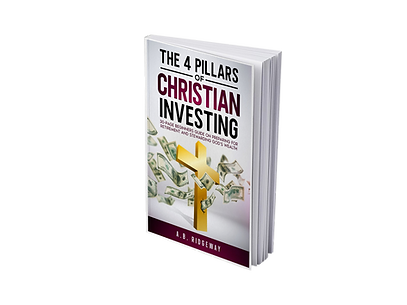
Join our Newsletter and receive our free 19-page e-book “4 Financial Principles Every Christian Should Know”
Click Here To Get Your Free Gift
About The Ridgeway Report:
As Christians, we were taught to be good stewards over our tithing and giving to the less fortunate. But when it came to our personal finances and investing we were left clueless on what the Bible says. What does the Bible say about managing debt, leaving a legacy, investing, and planning for your retirement? Mr. Christian Finance answers these and many other questions because we want to teach you how to become rich and righteous!
Meet A.B. Ridgeway:

A.B. Ridgeway, MBA, CPWA®️ (info@abrwealthmanagement.com) is the owner and Christian Financial Advisor with A.B. Ridgeway Wealth Management. With a decade in the finance industry, his goal is to give believers clarity around the most confusing topic in the Bible, money, and tithing. A.B. Ridgeway helps tithing Christians become cheerful givers but unlocking their money-making potential, so they can prosper and be the great stewards of the wealth God has entrusted them with.
*Disclaimer: This communication is not intended as an offer or solicitation to buy, hold or sell any financial instrument or investment advisory services. Any information provided has been obtained from sources considered reliable, but we do not guarantee the accuracy or the completeness of any description of securities, markets or developments mentioned. This is strictly for information purposes. We recommend you speak with a professional financial advisor.
*Some elements in this blog was created, restructured, edited or summarized by AI and may have altered from the original content. Warning: There may be errors that were creating during this transition that were not in the original content. Please double check all information.