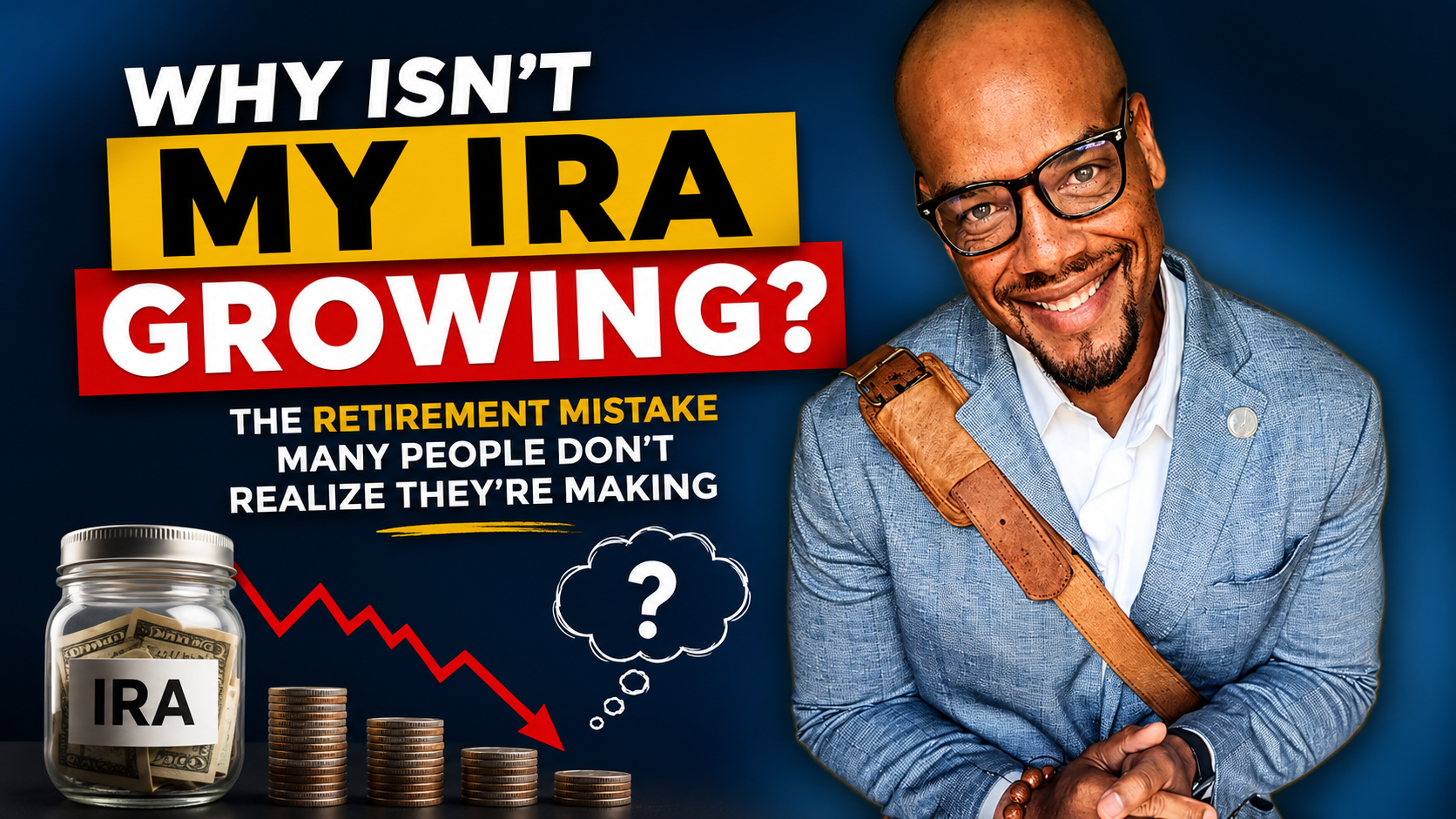

Americans are cashing out their 401ks at record levels.
Not borrowing.
Not taking a loan.
But wiping them out completely.
And most people don’t realize how much damage they’re doing until it’s too late.
If you’ve ever thought about touching your 401k after leaving a job — even “just temporarily” — this is a conversation you need to have before you make a decision you can’t undo.
As I shared in a recent episode of The Ridgeway Report, one wrong move with your retirement account can undo decades of saving, investing, and discipline in a single transaction.
Leaving a Job Is a Financial Crossroads
When you leave your job — whether by choice, retirement, or circumstance — your 401k doesn’t disappear. But what you do next matters more than most people realize.
In most cases, you have three options:
- Roll your 401k into a new employer’s plan
- Roll your 401k into an Individual Retirement Account (IRA)
- Cash it out
Only one of those options regularly destroys retirements.
“If you leave your job and cash out your 401k, you just might undo decades of saving and investing with one decision.”
Let’s walk through each option so you can understand what’s really at stake.
Option #1: Rolling Your 401k Into a New Employer Plan
If you’re not fully retired and plan to work for another employer, rolling your old 401k into your new company’s plan may make sense.
Some benefits include:
- Keeping all retirement assets in one place
- Potential creditor protection
- Continued payroll contributions
- Access to 401k loan features (in some cases)
That said, convenience should never be the deciding factor. Not all employer plans are created equal, and not all plans offer low fees or good investment options.
This decision should always be evaluated in the context of your full retirement plan, not just your next paycheck.
Option #2: Rolling Your 401k Into an IRA (The Most Popular Option)
For many people, a direct rollover into an IRA is the most flexible and tax-efficient option.
When done correctly:
- You avoid taxes
- You avoid the 10% early withdrawal penalty
- You preserve tax-deferred growth
- You gain more investment flexibility
But this only works if the rollover is done directly.
“If you make the mistake of rolling your 401k into a savings account, you create a taxable event.”
That mistake alone can cost you up to 47% of your retirement in taxes and penalties.
More control does not automatically mean better outcomes. With an IRA comes responsibility — discipline, planning, and accountability matter more than ever.
Option #3: Cashing Out Your 401k (The Most Dangerous Choice)
Cashing out a 401k is almost always the worst option.
Why?
Because you’re not just withdrawing money — you’re triggering:
- Ordinary income taxes
- A potential 10% early withdrawal penalty
- Loss of employer contributions
- Loss of compound growth
- Loss of decades of future income
If you withdraw a large balance in one year, you could push yourself into the highest tax bracket (37%) instantly.
“Do you really want to work 4.7 years for free because of one bad decision?”
Most people don’t — they just don’t understand the consequences until after the damage is done.
Why Emotional Decisions Destroy Retirement Plans
Job transitions are stressful. Financial pressure makes people reactive.
When people don’t have a plan, long-term thinking disappears.
“Good planning before crisis keeps you from making emotional decisions during crisis.”
Retirement planning isn’t about the next 60 days. It’s about the next 20–30 years.
That’s why moving retirement money quickly — just to “get access” — is often the most expensive mistake someone makes.
The Power Five: Who Should Be Involved Before You Move Your 401k
Before you touch your retirement account, you should consult what I call your Power Five:
- Financial Advisor (your quarterback)
- Accountant or Tax Professional
- Attorney (when legal issues apply)
- Power of Attorney
- Executor
Each plays a role — but the financial advisor helps coordinate the entire strategy so nothing gets overlooked.
The Goal Is Preservation, Not Liquidation
If you’re approaching retirement or recently retired, your objective has shifted.
It’s no longer about accumulation alone — it’s about preserving what you’ve built.
Cashing out your 401k to “feel liquid” today often guarantees stress tomorrow.
“The idea is to maintain your assets at the highest point possible — not give them away to taxes.”
Before You Touch Your 401k, Talk to Someone First
You don’t get a second chance to undo a rollover mistake after the deadline passes.
If you are:
- Leaving a job
- Recently retired
- Unsure what to do with an old 401k
- Feeling pressure to access retirement funds
I strongly encourage you to schedule a consultation before making any move.
👉 Schedule a consultation here:
One conversation can help you:
- Avoid unnecessary taxes and penalties
- Protect decades of compound growth
- Create a retirement strategy that actually lasts
Final Thought
You worked 10, 20, even 30 years to build your retirement.
Don’t let one emotional decision undo everything you’ve worked for.
My name is A.B. Ridgeway, and this has been another edition of The Ridgeway Report.
I’ll see you on the other side of your blessing.
About the Author
A.B. Ridgeway, CPWA® is the founder of A.B. Ridgeway Wealth Management and host of The Ridgeway Report. He specializes in helping retirees and pre-retirees create reliable income, invest with clarity, and make confident financial decisions.
Join our Newsletter and receive our free 19-page e-book “4 Financial Principles Every Christian Should Know”

Click Here To Get Your Free Gift
About The Ridgeway Report:
As Christians, we were taught to be good stewards over our tithing and giving to the less fortunate. But when it came to our personal finances and investing we were left clueless on what the Bible says. What does the Bible say about managing debt, leaving a legacy, investing, and planning for your retirement? Mr. Christian Finance answers these and many other questions because we want to teach you how to become rich and righteous!
Meet A.B. Ridgeway:

A.B. Ridgeway, MBA, CPWA®️ (info@abrwealthmanagement.com) is the owner and Christian Financial Advisor with A.B. Ridgeway Wealth Management. With a decade in the finance industry, his goal is to give believers clarity around the most confusing topic in the Bible, money, and tithing. A.B. Ridgeway helps tithing Christians become cheerful givers but unlocking their money-making potential, so they can prosper and be the great stewards of the wealth God has entrusted them with.
*Disclaimer: This communication is not intended as an offer or solicitation to buy, hold or sell any financial instrument or investment advisory services. Any information provided has been obtained from sources considered reliable, but we do not guarantee the accuracy or the completeness of any description of securities, markets or developments mentioned. This is strictly for information purposes. We recommend you speak with a professional financial advisor.
*Some elements in this blog was created, restructured, edited or summarized by AI and may have altered from the original content. Warning: There may be errors that were creating during this transition that were not in the original content. Please double check all information.