

For decades, becoming a millionaire was seen as the ultimate financial milestone. We grew up believing that once you hit that $1 million mark, retirement would be easy—no stress, no worries, and complete financial freedom.
But times have changed.
Inflation has increased. Healthcare costs are rising. People are living longer. Taxes are more complex. And retirement today looks very different than it did 20 or 30 years ago.
So the real question becomes:
Does $1 million still provide the retirement lifestyle you want?
In this episode of The Ridgeway Report, I break down the honest answer—and explain why there is no single “magic number” when it comes to retirement.
Instead of giving you a simple yes or no, I walk through the three most important factors you must consider when deciding whether $1 million is enough for you, plus a bonus perspective that most people overlook.
What You’ll Learn in This Video
We cover topics that most people don’t think about until it’s too late, including:
• How the 4% rule actually works—and why it’s only a starting point
• Why sequence of returns risk can make or break your retirement
• How withdrawing money during down markets impacts long-term success
• The difference between gross vs. net retirement assets
• Why taxes and asset location matter more than most people realize
• How a million dollars in an IRA is very different from a million dollars in cash
• The role of Social Security, pensions, and other income sources
• How marital status, dependents, and lifestyle affect retirement longevity
• Why inflation can quietly erode your purchasing power over time
• How to determine your retirement number based on real expenses—not headlines
Why the 4% Rule Isn’t a Guarantee
Many financial advisors reference the 4% rule as a way to estimate how much income you can safely withdraw from a portfolio.
For example:
• $500,000 → $20,000 per year
• $1,000,000 → $40,000 per year
But this rule was never meant to be a promise. It’s a guideline.
Market performance, timing, and withdrawals—especially early in retirement—play a huge role in whether your money lasts 20, 25, or even 30 years. This is where sequence of returns risk becomes critical.
If markets decline early and you’re still pulling income, it can permanently damage your portfolio’s ability to recover.
Why Asset Location and Taxes Matter
Another major factor is where your money is held.
A million dollars in:
• A traditional IRA
• A brokerage account
• A savings account
…are all treated very differently.
Taxes, growth potential, and inflation exposure can drastically change how long your money lasts. In some cases, a poorly positioned $1 million can run out much faster than expected.
We also briefly touch on advanced strategies—such as Qualified Charitable Distributions (QCDs)—for individuals who are charitable and want to reduce taxes on required minimum distributions.
Lifestyle Is the Real Variable
The truth is, $1 million may be more than enough for someone who:
• Is single
• Has no debt
• Lives below their means
But it may not be enough for someone who:
• Is married
• Has dependents
• Wants to travel frequently
• Plans to purchase vehicles, RVs, or second homes
• Faces rising healthcare or education costs
That’s why retirement planning must start with lifestyle and expenses, not an arbitrary number.
The Bonus Tip Most People Miss
Instead of asking, “Is $1 million enough?”
Ask:
What do I actually need to live the life I want?
Start with the basics:
• Housing
• Food
• Utilities
• Transportation
• Healthcare
Then factor in:
• Social Security (check your benefits at ssa.gov)
• Employer pensions or retirement income
• Fixed vs. variable income sources
Once you understand what income is coming in, you can determine how much needs to come from your investments—and how much you truly need to save.
Need Help Finding Your Retirement Number?
Whether you’re:
• Approaching retirement
• Recently retired
• Or unsure if $1 million is enough for your situation
You don’t have to figure this out alone.
👉 Schedule a consultation here: https://calendly.com/abridgewaywm/consultation
Let’s build a retirement plan based on your life—not a headline number.
My name is A.B. Ridgeway, and this has been another episode of The Ridgeway Report.
Hashtags
#RetirementPlanning #Retirement #MillionDollarRetirement #401k #IRA #SocialSecurity #Investing #PersonalFinance #WealthManagement #RidgewayReport #ABRidgeway
If you want, next I can:
- Optimize this description further for YouTube keyword density
- Add timestamps / chapters
- Write a pinned comment CTA
- Or tailor a shorter version for YouTube Shorts
By A.B. Ridgeway | The Ridgeway Report
For as long as most of us can remember, becoming a millionaire was the ultimate financial milestone.
We were told that if we could just save $1 million, we’d be set for life—able to retire comfortably and do whatever we wanted.
But here’s the real question:
Does $1 million still buy the retirement lifestyle people expect today?
The answer isn’t a simple yes or no. It depends—and in this article, I’ll explain exactly why.
1. How Much Should You Actually Save?
Before we even decide if $1 million is enough, we need to answer a more important question:
How much income do you actually need in retirement?
Financial advisors often reference something called the 4% rule. It suggests that withdrawing roughly 4% of your portfolio each year gives you a high probability of your money lasting 20+ years.
- $500,000 × 4% = $20,000 per year
- $1,000,000 × 4% = $40,000 per year
That $40,000 may or may not be enough depending on:
- Your lifestyle
- Whether your home and car are paid off
- Travel plans
- Healthcare needs
And here’s the key point: the 4% rule is not a guarantee. It’s a starting point.
The Risk Most People Ignore: Sequence of Returns
Sequence of returns risk refers to the order in which market gains and losses occur, especially early in retirement.
If markets decline early and you’re still withdrawing income, those withdrawals can permanently damage your portfolio’s ability to recover.
That’s why retirement planning is not just about how much you withdraw—but when and how you withdraw it.
2. Is That $1 Million Gross or Net?
This is a big one.
A million dollars is not always a million dollars.
- $1 million in a traditional IRA is pre-tax
- $1 million in a savings account may earn very little
- $1 million in a brokerage account has different tax rules
Asset location matters.
Withdrawals from tax-deferred accounts may be taxed as ordinary income, which means you’ll receive less than $1 million over time.
However, those same assets may continue growing—unlike cash sitting in a low-interest savings account that loses purchasing power to inflation.
A Note on Charitable Giving
If you are charitable, there are strategies—such as Qualified Charitable Distributions (QCDs)—that may help reduce taxes on required minimum distributions. These strategies require planning but can be very powerful for the right person.
3. Your Household Matters
A million dollars can look very different depending on your situation.
- Single with everything paid off?
- Married with dependents?
- Supporting children or grandchildren?
The more people relying on your income, the more pressure your retirement assets face.
Don’t Forget Inflation
A million dollars today does not buy what it did 20 years ago—and it won’t buy what it does today 20 years from now.
Medical costs, education, housing, and everyday expenses continue to rise. Money sitting in low-yield accounts often fails to keep up with inflation, shrinking your purchasing power over time.
So… Is $1 Million Enough?
The honest answer is:
- Yes, it can be—for some people
- No, it won’t be—for others
There is no “magic number.”
The real question is:
Does your plan support the life you want to live?
The Bonus Tip: Start With Your Lifestyle
Instead of chasing a number, start at the bottom:
- Housing
- Food
- Utilities
- Transportation
- Travel
- Healthcare
Then factor in:
- Social Security (check your account at ssa.gov)
- Pensions or employer benefits
- Fixed vs variable income
Once you know what income is coming in, you can determine how much needs to come from your investments—and how much you actually need to save.
Planning Is the Difference
Planning early:
- Reduces stress
- Increases flexibility
- Makes retirement easier—not harder
As my dad always said:
If you live below your means, you will always have money.
If you live above your means, you will always have debt.
Need Help Finding Your Number?
Whether you’re:
- Preparing for retirement
- Recently retired
- Or unsure if $1 million is enough for you
I’d be happy to help.
👉 Schedule a consultation using the link below.
Let’s build a plan around your life—not a headline number.
My name is A.B. Ridgeway, and this has been another edition of The Ridgeway Report.
About the Author
A.B. Ridgeway, CPWA® is the founder of A.B. Ridgeway Wealth Management and host of The Ridgeway Report. He specializes in helping retirees and pre-retirees create reliable income, invest with clarity, and make confident financial decisions.
Join our Newsletter and receive our free 19-page e-book “4 Financial Principles Every Christian Should Know”
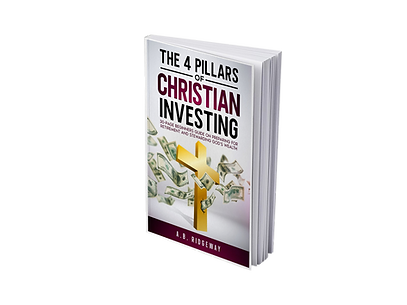
Click Here To Get Your Free Gift
About The Ridgeway Report:
As Christians, we were taught to be good stewards over our tithing and giving to the less fortunate. But when it came to our personal finances and investing we were left clueless on what the Bible says. What does the Bible say about managing debt, leaving a legacy, investing, and planning for your retirement? Mr. Christian Finance answers these and many other questions because we want to teach you how to become rich and righteous!
Meet A.B. Ridgeway:

A.B. Ridgeway, MBA, CPWA®️ (info@abrwealthmanagement.com) is the owner and Christian Financial Advisor with A.B. Ridgeway Wealth Management. With a decade in the finance industry, his goal is to give believers clarity around the most confusing topic in the Bible, money, and tithing. A.B. Ridgeway helps tithing Christians become cheerful givers but unlocking their money-making potential, so they can prosper and be the great stewards of the wealth God has entrusted them with.
*Disclaimer: This communication is not intended as an offer or solicitation to buy, hold or sell any financial instrument or investment advisory services. Any information provided has been obtained from sources considered reliable, but we do not guarantee the accuracy or the completeness of any description of securities, markets or developments mentioned. This is strictly for information purposes. We recommend you speak with a professional financial advisor.
*Some elements in this blog was created, restructured, edited or summarized by AI and may have altered from the original content. Warning: There may be errors that were creating during this transition that were not in the original content. Please double check all information.