
By A.B. Ridgeway | The Ridgeway Report
Choosing a financial advisor is one of the most important decisions you will ever make. This is the person who will help guide your investments, your retirement, and your financial future. Yet many people select an advisor without knowing what warning signs to look for.
In this article, I’m going to walk you through the most common red flags I see in financial advisors—the same ones that can quietly cost you money, confidence, and peace of mind if you ignore them.
My goal is simple: to empower you with clarity so you can make informed decisions about your money.
Red Flag #1: Too Much Jargon
Finance has its own language.
Sequence of returns. APR. APY. Diversification risk. Traditional IRA. Roth IRA. 401k. 403b.
For someone new to investing or recently retired, this can feel overwhelming. You shouldn’t need a finance degree just to understand what’s happening with your own money.
When an advisor uses excessive jargon, it is usually for one of three reasons:
- They may not fully understand the concept themselves
- They are trying to impress you
- They are communicating over your head instead of with you
None of these are acceptable.
Yes, there are real terms you need to learn—especially when completing transactions like rollovers. But a good advisor explains complex concepts in simple language. If your advisor is unwilling to slow down and explain what something means, that is a red flag.
Overcomplicating Simple Concepts
Some advisors also overcomplicate very simple processes.
For example, rolling over a 401k simply means moving money from one institution to another under your name. It does not need to be buried in technical explanations that confuse you more than they help you.
If you leave meetings feeling more confused than when you arrived, pay attention. That matters.
Red Flag #2: Word Salad and Circular Explanations
Another warning sign is what I call “word salad.”
This happens when an advisor keeps explaining the same concept over and over, adding more words but no more clarity. Instead of simplifying, they complicate. Instead of helping, they confuse.
If you cannot clearly explain what your advisor just told you, that is not effective communication—and it is not in your best interest.
Red Flag #3: Vague or Ambiguous Language
Be cautious of advisors who use vague phrases like:
- “You’ll be happy”
- “This will make you successful”
- “This will give you freedom”
What does that even mean?
Happiness, success, and freedom are subjective.
A good advisor does not define those terms for you. They ask you what they mean to you—and then build a financial plan around your definition.
Your advisor’s job is not to tell you what success looks like.
Their job is to translate your goals into financial strategy.
Precision matters. If an advisor can’t be specific, that’s a problem.
Red Flag #4: No Clear Advice
Some advisors avoid giving direct answers.
They respond with:
- “Well, what do you think?”
- “It depends…”
- “We can figure that out later…”
As a financial advisor, it is our responsibility to provide guidance. That does not mean making decisions for you—it means giving you the information you need so you can make informed decisions.
Your money is always your money.
But if your advisor never gives direction, that is not advice. That is avoidance.
Red Flag #5: Acting Before You Fully Understand
This one is critical.
If an advisor says:
- “I already filled out the paperwork.”
- “We can decide later.”
- “I went ahead and started the process.”
Stop.
Nothing should move forward until:
- You understand the strategy
- You understand the benefits
- You understand the risks
- And you give clear consent
You deserve to know what is happening with your money before anything happens.
Red Flag #6: The Assumptive Close
This one really gets under my skin.
An assumptive close sounds like:
- “When we put up the new wallpaper…”
- “When you become a client…”
- “After we move your money…”
Who said we were moving forward?
No advisor should assume your yes.
Your agreement should be earned, not presumed.
Until you say, “Let’s proceed,” everything is still a conversation.
Bonus Red Flag: An Advisor Who Refuses to Teach
This is one of the biggest indicators of the wrong advisor.
A good financial advisor:
- Educates you
- Explains concepts clearly
- Provides resources
- Answers questions
- Empowers you to understand your money
They are not trying to turn you into a financial advisor—but they should absolutely give you enough knowledge to make intelligent decisions.
Some of my best clients call me and say:
“Mr. Ridgeway, I’ve been researching this stock, reviewing the earnings, looking at the dividends, and I’m thinking about reallocating. What do you think?”
That is a powerful relationship.
That is not teacher-student.
That is person-to-person.
And that is how it should be.
Why This Matters
You hire a financial advisor because they can see things you cannot. That is their value. But that only works when there is:
- Clear communication
- Mutual understanding
- Trust
- Education
If any of those are missing, it’s time to ask hard questions.
Final Thoughts
If you are looking for a financial advisor who will:
- Speak clearly
- Teach patiently
- Respect your decisions
- And empower you with knowledge
Then you deserve better than confusion and assumptions.
Your retirement.
Your investments.
Your family.
Your future.
These are too important to leave in the wrong hands.
Ready to Have a Real Conversation About Your Money?
If you’re searching for a financial advisor who will take the time to explain, educate, and help you build retirement on your terms, I’d love to speak with you.
👉 Click the link below to schedule a consultation.
https://calendly.com/abridgewaywm/consultation
Let’s talk about your goals, your concerns, and how to create a plan that actually makes sense for you.
My name is A.B. Ridgeway, and this has been another edition of The Ridgeway Report.
About the Author
A.B. Ridgeway, CPWA® is the founder of A.B. Ridgeway Wealth Management and host of The Ridgeway Report. He specializes in helping retirees and pre-retirees create reliable income, invest with clarity, and make confident financial decisions.
Join our Newsletter and receive our free 19-page e-book “4 Financial Principles Every Christian Should Know”
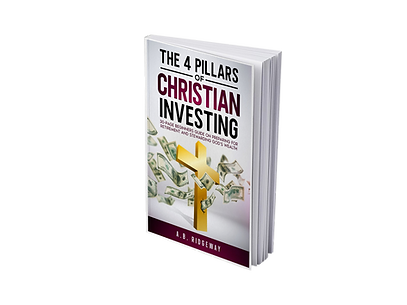
Click Here To Get Your Free Gift
About The Ridgeway Report:
As Christians, we were taught to be good stewards over our tithing and giving to the less fortunate. But when it came to our personal finances and investing we were left clueless on what the Bible says. What does the Bible say about managing debt, leaving a legacy, investing, and planning for your retirement? Mr. Christian Finance answers these and many other questions because we want to teach you how to become rich and righteous!
Meet A.B. Ridgeway:

A.B. Ridgeway, MBA, CPWA®️ (info@abrwealthmanagement.com) is the owner and Christian Financial Advisor with A.B. Ridgeway Wealth Management. With a decade in the finance industry, his goal is to give believers clarity around the most confusing topic in the Bible, money, and tithing. A.B. Ridgeway helps tithing Christians become cheerful givers but unlocking their money-making potential, so they can prosper and be the great stewards of the wealth God has entrusted them with.
*Disclaimer: This communication is not intended as an offer or solicitation to buy, hold or sell any financial instrument or investment advisory services. Any information provided has been obtained from sources considered reliable, but we do not guarantee the accuracy or the completeness of any description of securities, markets or developments mentioned. This is strictly for information purposes. We recommend you speak with a professional financial advisor.
*Some elements in this blog was created, restructured, edited or summarized by AI and may have altered from the original content. Warning: There may be errors that were creating during this transition that were not in the original content. Please double check all information.