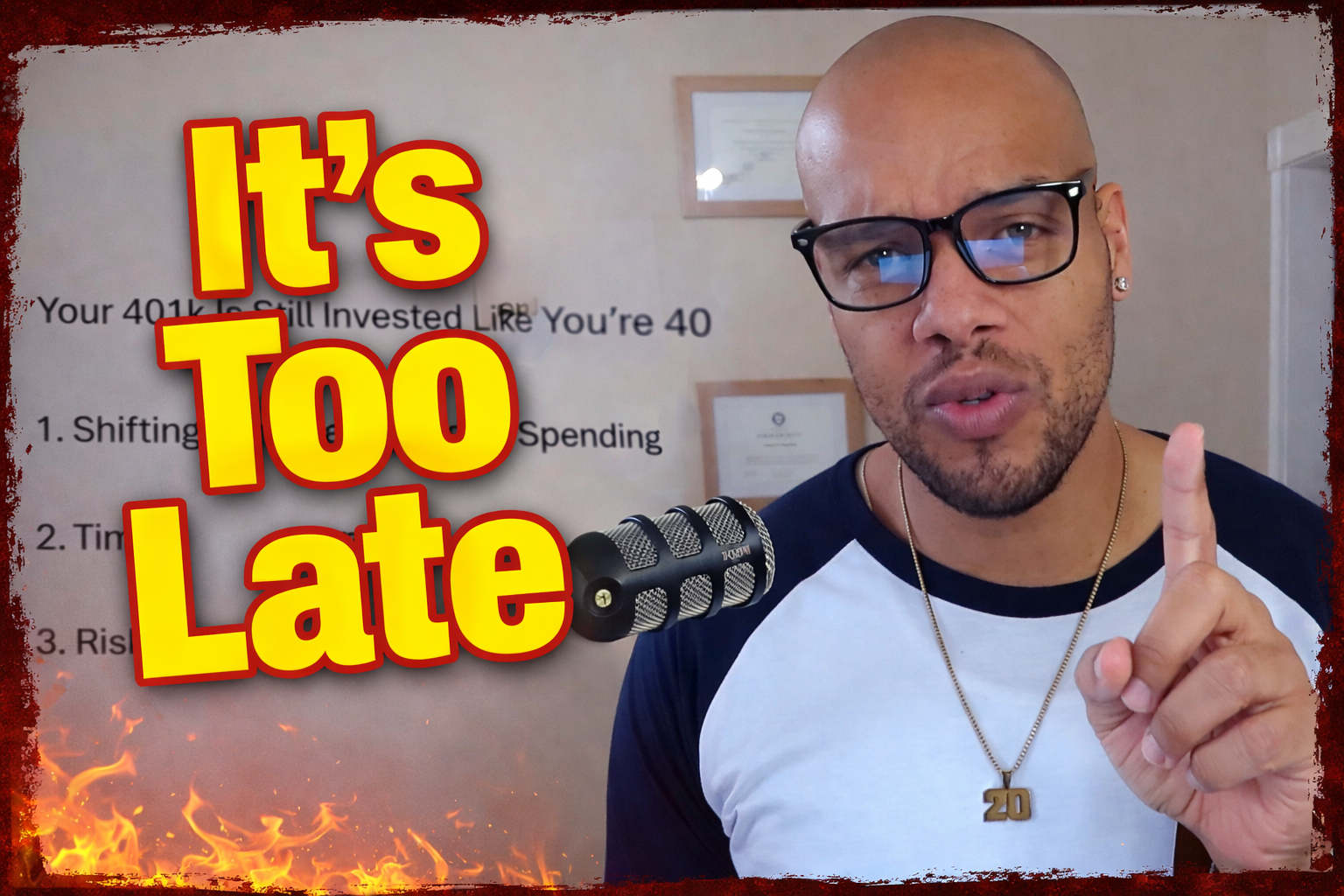

“I opened a Roth IRA when I was 54, put $6,000 into it, and just let it sit there because I didn’t know you were supposed to invest it.”
If you’ve ever wondered why your retirement account isn’t growing the way it used to when it was inside your employer’s plan, you’re not alone.
In fact, this may be one of the most common—and most costly—mistakes people make when rolling over a 401(k) or opening an IRA.
The Difference Between an Account and an Investment
Many people believe that a Roth IRA or Traditional IRA is an investment.
It’s not.
An IRA is simply an account type, much like a checking account or a savings account. It has different tax rules, but it is only a container.
Inside that container, you can hold:
- Cash
- Stocks
- Bonds
- Mutual Funds
- ETFs
- Index Funds
- Money Markets
The account itself does not create growth.
The investments inside the account are what have the potential to grow over time.
What Happens When You Leave Your Employer?
While you’re working, your 401(k) is generally invested in stocks and bonds.
Most people choose an option such as:
- Conservative
- Moderate
- Aggressive
Then they rarely think about it again.
However, when you retire or leave your employer, your plan administrator doesn’t transfer the actual stocks and bonds to your IRA.
Instead, they typically liquidate the investments and transfer cash.
That’s an important distinction.
Assets appreciate. Cash generally does not.
The balance on your statement is simply a reflection of the value of the underlying investments. Once those investments are sold, what arrives in your IRA is often cash waiting for instructions.
The Hidden Danger of Idle Money
Many retirees unknowingly roll over their money and then leave it sitting in cash.
Others may have their funds parked inside a money market account earning only 1% or 2%.
The problem?
Cash may provide stability, but over long periods it often fails to keep up with inflation.
That means your purchasing power can slowly decline over time.
Why Isn’t My Retirement Account Growing?
If your account used to grow while it was at work but now seems to have stalled, there’s a good chance the money is simply sitting in cash.
This is one of the first things a financial advisor reviews.
Questions we often ask include:
- How long has this money been sitting here?
- Is it earmarked for a specific purpose?
- Are you intentionally holding cash?
- Does your investment strategy align with your retirement goals?
Sometimes people discover that money has been sitting idle for:
- One year
- Two years
- Four years
- Even five years
Without realizing it.
Good Advice Can Change Everything
The woman who shared her story eventually met with a financial advisor.
She learned that the money inside her Roth IRA needed to be invested.
After putting her money to work, her account eventually grew to over $41,000.
More than anything, what stood out was the relief on her face.
Not because she had become wealthy overnight.
But because someone helped her identify a financial blind spot she didn’t even know existed.
Financial Advisors Help You See What You Can’t See
There’s a concept called inattentional blindness.
Something can be right in front of us, but if we don’t know what we’re looking at, we simply overlook it.
The same thing happens with money.
Many people don’t realize:
- Their accounts are sitting in cash.
- Their beneficiaries are outdated.
- Their investments no longer match their goals.
- Their retirement income strategy has gaps.
- Their tax situation could be improved.
A financial advisor’s role isn’t just to manage money.
It’s to help you identify the blind spots that could affect your retirement.
Is It Too Late?
One of the biggest myths people tell themselves is:
“I’m too old.”
“I’m 55.”
“I’m 60.”
“I’m 65.”
“I’m 70.”
“It’s too late.”
But it’s never too late to make better decisions.
It’s never too late to gain clarity.
And it’s never too late to put your money to work in a way that supports the retirement you’ve spent decades preparing for.
The Bottom Line
A Roth IRA or Traditional IRA is only a container.
Without an investment strategy, your money may simply sit idle.
If you’re approaching retirement or recently retired, understanding how your money is invested—and making sure it aligns with your goals—can make a significant difference over time.
Sometimes, the biggest breakthroughs don’t come from finding a new investment.
They come from discovering what you didn’t know was missing.
Watch the video above to learn how one small mistake prevented years of growth—and why it’s never too late to get back on track.
This article is for informational and educational purposes only and should not be construed as investment, tax, or legal advice. Investing involves risk, including the possible loss of principal. Consult with qualified professionals regarding your individual situation.
Need Help Reviewing Your 401k?
If you’re unsure how to move your 401k—or you’re afraid of triggering a massive tax bill—professional guidance can make all the difference.
A proper 401k review looks at:
- Your plan administrator rules
- Your age and eligibility
- Tax implications
- Rollover options
- Investment strategy after the rollover
Schedule a consultation to review your 401k and explore your options before making a move you can’t undo.
Written by A.B. Ridgeway, EA, MBA, CPWA®
The Ridgeway Report
About the Author
A.B. Ridgeway, CPWA® is the founder of A.B. Ridgeway Wealth Management and host of The Ridgeway Report. He specializes in helping retirees and pre-retirees create reliable income, invest with clarity, and make confident financial decisions.
Join our Newsletter and receive our free 19-page e-book “4 Financial Principles Every Christian Should Know”
Click Here To Get Your Free Gift
About The Ridgeway Report:
As Christians, we were taught to be good stewards over our tithing and giving to the less fortunate. But when it came to our personal finances and investing we were left clueless on what the Bible says. What does the Bible say about managing debt, leaving a legacy, investing, and planning for your retirement? Mr. Christian Finance answers these and many other questions because we want to teach you how to become rich and righteous!
Meet A.B. Ridgeway:

A.B. Ridgeway, MBA, CPWA®️ (info@abrwealthmanagement.com) is the owner and Christian Financial Advisor with A.B. Ridgeway Wealth Management. With a decade in the finance industry, his goal is to give believers clarity around the most confusing topic in the Bible, money, and tithing. A.B. Ridgeway helps tithing Christians become cheerful givers but unlocking their money-making potential, so they can prosper and be the great stewards of the wealth God has entrusted them with.
*Disclaimer: This communication is not intended as an offer or solicitation to buy, hold or sell any financial instrument or investment advisory services. Any information provided has been obtained from sources considered reliable, but we do not guarantee the accuracy or the completeness of any description of securities, markets or developments mentioned. This is strictly for information purposes. We recommend you speak with a professional financial advisor.
*Some elements in this blog was created, restructured, edited or summarized by AI and may have altered from the original content. Warning: There may be errors that were creating during this transition that were not in the original content. Please double check all information.