
Retirement is one of the most personal financial decisions a person will ever make. There is no universal age, no magic number, and no single moment when someone can say with certainty, “This is the exact day everyone should retire.”
That said, there is one mistake that consistently shows up in retirement planning conversations—and it’s not retiring too early.
It’s waiting longer than you actually need to.
In this episode of The Ridgeway Report, we explore why delaying retirement can quietly cost you far more than money. Time, health, identity, and relationships are assets just as real as dollars and cents, yet they are often ignored when people decide to keep working “just a few more years.”
Life Is Short — And You Don’t Fully Realize It Until It Isn’t
Everyone knows the phrase “life is short,” but it doesn’t fully register until life starts feeling short.
In your 20s and 30s, time feels unlimited. In your 40s, you start to notice how quickly years pass. In your 50s, 60s, and 70s, time becomes tangible. You can feel it slipping by.
At that point, many people begin asking deeper questions:
- What am I actually giving up by working 40–50 hours a week?
- What moments am I missing with my family?
- How many games, birthdays, vacations, and quiet evenings am I trading for income I may no longer need?
These are opportunity costs that never appear on a financial statement—but they matter deeply.
Retirement isn’t about doing nothing. It’s about choosing how you spend the limited time you have left.
Health Is a Declining Asset — Whether We Like It or Not
Many people plan retirement as if health is guaranteed. Unfortunately, it isn’t.
Pain compounds over time. Energy declines. Recovery slows. Things that once felt minor in your 30s become chronic in your 50s and limiting in your 60s and 70s.
Lower back pain. Arthritis. Fatigue. Mobility issues. Chronic conditions.
Waiting too long to retire often means gaining freedom when your body no longer allows you to enjoy it.
That’s why retirement planning isn’t just about money—it’s about retiring while you still have the health to use the freedom you worked for.
Preventative care, stress reduction, and balance matter. Working yourself into exhaustion while telling yourself you’ll “enjoy life later” is one of the biggest risks people take without realizing it.
Your Job Is Not Your Family (Even If It Feels Like It)
Modern workplaces are very good at creating emotional attachment.
Free dinners. Happy hours. Team retreats. Awards. Recognition. Mission statements. Titles. Badges. Promotions.
These things create identity. They create belonging.
But here’s the truth many people don’t want to face:
Your job is not your family.
You may spend more waking hours with coworkers than with your loved ones, but when your job ends, the company moves on. Your family does not.
When most of your time, energy, and emotional bandwidth goes to work, something else quietly suffers—often the very people you’re working for.
Retirement planning forces you to confront a hard question:
Are you working for money, or are you working for identity?
The Real Question Isn’t “Can I Retire?” — It’s “When Do I Have Enough?”
One of the most important conversations I have with clients isn’t about investment returns or market forecasts.
It’s about enough.
- How much money do you actually need to support your lifestyle?
- How much time have you already sold?
- How many more hours do you really need to trade for income?
- At what point does additional money stop improving your quality of life?
Every extra year worked beyond necessity has a cost. It’s one more year you can’t get back.
This doesn’t mean everyone should retire early. Some people genuinely love their work. Some have great balance. Some find purpose in what they do.
But retirement should be a choice, not a default driven by fear or habit.
Planning Turns Retirement Into a Decision, Not a Guess
As a financial advisor, my role isn’t to tell you when to retire.
My role is to help you answer:
- Will your assets support your lifestyle?
- How long does your money realistically need to last?
- What income sources will you have before and after retirement?
- How much margin do you need for emergencies and peace of mind?
When those questions are answered clearly, retirement becomes intentional—not stressful.
If you’re wondering whether you’re working longer than necessary, or if you simply want clarity about your options, it may be time to have a conversation.
Ready to Explore What “Enough” Looks Like?
If this topic resonates with you, I invite you to watch the full episode of The Ridgeway Report and explore what retirement could look like on your terms.
You can also schedule a consultation to run the numbers and build a plan around your life—not just your job.
Because retirement isn’t about stopping work.
It’s about starting life on your own schedule.
About the Author
A.B. Ridgeway, CPWA® is the founder of A.B. Ridgeway Wealth Management and host of The Ridgeway Report. He specializes in helping retirees and pre-retirees create reliable income, invest with clarity, and make confident financial decisions.
Join our Newsletter and receive our free 19-page e-book “4 Financial Principles Every Christian Should Know”
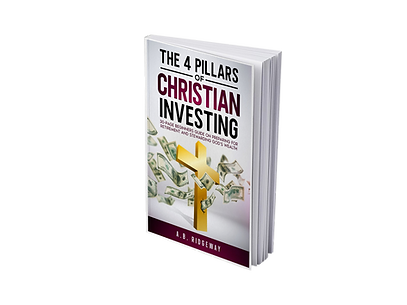
Click Here To Get Your Free Gift
About The Ridgeway Report:
As Christians, we were taught to be good stewards over our tithing and giving to the less fortunate. But when it came to our personal finances and investing we were left clueless on what the Bible says. What does the Bible say about managing debt, leaving a legacy, investing, and planning for your retirement? Mr. Christian Finance answers these and many other questions because we want to teach you how to become rich and righteous!
Meet A.B. Ridgeway:

A.B. Ridgeway, MBA, CPWA®️ (info@abrwealthmanagement.com) is the owner and Christian Financial Advisor with A.B. Ridgeway Wealth Management. With a decade in the finance industry, his goal is to give believers clarity around the most confusing topic in the Bible, money, and tithing. A.B. Ridgeway helps tithing Christians become cheerful givers but unlocking their money-making potential, so they can prosper and be the great stewards of the wealth God has entrusted them with.
*Disclaimer: This communication is not intended as an offer or solicitation to buy, hold or sell any financial instrument or investment advisory services. Any information provided has been obtained from sources considered reliable, but we do not guarantee the accuracy or the completeness of any description of securities, markets or developments mentioned. This is strictly for information purposes. We recommend you speak with a professional financial advisor.
*Some elements in this blog was created, restructured, edited or summarized by AI and may have altered from the original content. Warning: There may be errors that were creating during this transition that were not in the original content. Please double check all information.