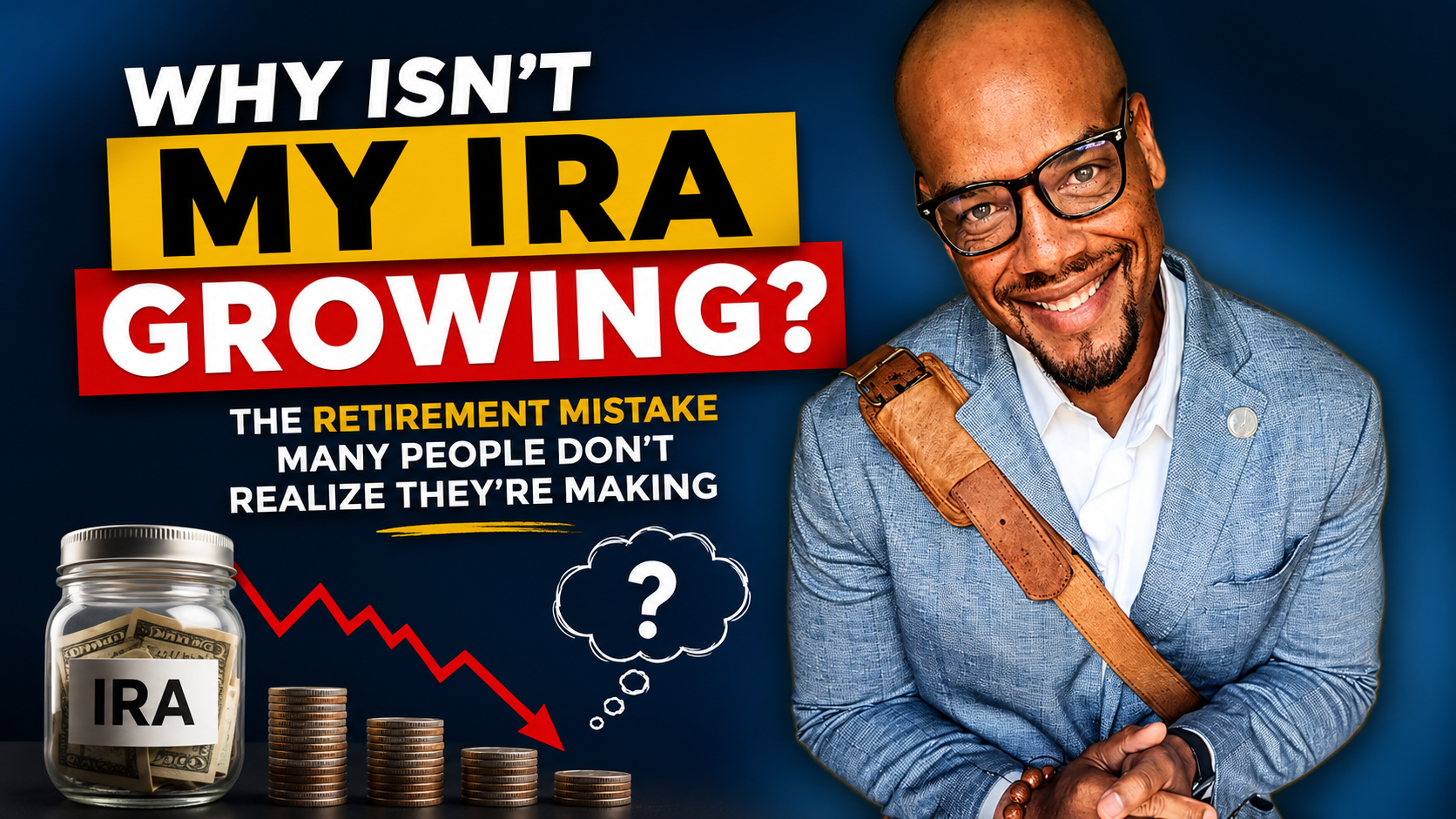

For decades, Americans have been taught a simple formula for retirement:
Work hard, save in your 401k, collect Social Security, and everything will work out.
Unfortunately, that formula leaves out reality.
What I see as a financial advisor isn’t a lack of effort or discipline. It’s confusion. People reach retirement having done “everything right,” yet still feel anxious, uncertain, and underprepared. Not because they didn’t save—but because they believed retirement myths that quietly undermine financial security.
In this episode of The Ridgeway Report, we break down three retirement myths that can keep you broke, stressed, or even force you back into the workforce after you thought you were done. These aren’t fringe ideas. These are common assumptions that sound reasonable until retirement actually begins.
Let’s walk through them.
Myth #1: Social Security Is a Golden Parachute
One of the most dangerous retirement myths is the belief that Social Security will “take care of everything.”
From your very first paycheck, you see deductions for FICA taxes—Social Security and Medicare. Over decades, that money adds up, so it’s natural to assume the payoff will be substantial. Many people think, “I’ve been paying into this since I was 18. When I retire, I’ll finally get my money back.”
But Social Security was never designed to fully replace your income.
Even under the most optimistic scenario, the maximum Social Security benefit requires:
- Earning at or near the income cap for most of your career
- Waiting until age 70 to claim benefits
According to Social Security Administration projections, even the maximum benefit is around $5,000 per month if you delay until age 70. Claim earlier, and that number drops significantly. Most retirees receive far less.
Now compare that to your working income.
If you were earning $150,000 to $180,000 per year, stepping down to roughly $60,000 in annual Social Security income represents a massive lifestyle shift. That’s not a gentle transition—that’s a cliff.
Without additional income sources, retirees are forced to:
- Downsize their lifestyle unexpectedly
- Delay retirement longer than planned
- Return to work out of necessity
Social Security should be viewed as a foundation, not the entire structure. Retirement planning must begin years before benefits start, or the result becomes reactive instead of proactive.
Myth #2: 401k Money Is Tax-Free
Another common misconception is that 401k and retirement account money belongs entirely to you, tax-free.
It doesn’t.
Traditional 401ks and IRAs are tax-deferred, not tax-exempt. That means the government hasn’t forgotten about taxes—it has simply postponed them.
When you contribute money to a 401k:
- You avoid paying taxes today
- Your investments grow without annual capital gains taxes
- But taxes are due when you withdraw the money
When distributions begin, withdrawals are taxed as ordinary income, not capital gains. That distinction matters.
If you pull out large sums without a strategy, you can:
- Push yourself into higher tax brackets
- Trigger unnecessary tax bills
- Permanently reduce the longevity of your portfolio
This is why the idea of “just taking all the money out and putting it in savings” is so dangerous. Not only do you lose tax-deferred growth, but you also hand the IRS a massive check in one year.
This isn’t double taxation. The money simply wasn’t taxed yet.
Understanding how, when, and in what order to take retirement distributions is one of the most critical parts of retirement income planning—and one of the most misunderstood.
Myth #3: Savings Accounts Are Safe for Retirement
Cash feels safe. It’s familiar. It’s accessible. And because the balance doesn’t fluctuate like the stock market, many retirees believe savings accounts are the safest place for retirement money.
But safety is relative.
Savings accounts carry two major risks that often go unnoticed:
1. Tax Risk
Moving large sums from tax-deferred retirement accounts into savings can trigger significant tax consequences. Once taxes are paid, that money can never be recovered.
2. Inflation Risk
A dollar today is worth more than a dollar tomorrow.
Inflation quietly erodes purchasing power. Money sitting still doesn’t just fail to grow—it loses value over time.
A simple example illustrates this clearly. A quarter that bought gum decades ago no longer does today. The coin didn’t change, but the economy did.
The same thing happens to retirement savings. Even modest inflation compounds over time, meaning retirees need their assets to grow just to maintain the same standard of living.
Savings accounts may provide liquidity, but they rarely provide longevity.
Smart retirement planning balances risk and reward, recognizing that the risk of running out of money is often greater than the risk of market volatility.
Bonus Myth: You’ll Never Have to Work Again
Many retirees say they return to work because they’re “bored.”
Sometimes that’s true.
But often, it’s a cover for financial stress.
Running out of money—or realizing income isn’t sufficient—can be embarrassing. Rather than admit it, retirees frame re-entry into the workforce as a lifestyle choice.
The real goal of retirement planning isn’t just to retire. It’s to stay retired.
That means designing:
- Sustainable income
- Purposeful use of time
- A new identity beyond a job title
Without this transition, retirees can experience loneliness, loss of identity, and even depression—especially if work was their primary source of structure and validation.
Why Retirement Planning Is About More Than Money
A true retirement plan answers deeper questions:
- Who do I want to be when I stop working?
- What will my days look like?
- What does “enough” really mean?
- How do I fund a life that supports my values, not just my expenses?
Planning early allows you to retire with intention instead of fear. It allows you to give generously, live comfortably, and maintain dignity without scrambling late in life.
An ounce of prevention truly is worth a pound of cure.
Final Thoughts
Retirement myths persist because they’re comforting. They simplify complex realities. But believing them comes at a cost.
Social Security alone is rarely enough.
401k money isn’t tax-free.
Savings accounts aren’t truly safe long-term.
The earlier these myths are addressed, the more control you gain over your future.
If you want help building a retirement strategy that avoids these traps and aligns with the life you want to live, I encourage you to watch the full episode of The Ridgeway Report and schedule a consultation.
Retirement isn’t about stopping work.
It’s about starting the next chapter with clarity, confidence, and purpose.
About the Author
A.B. Ridgeway, CPWA® is the founder of A.B. Ridgeway Wealth Management and host of The Ridgeway Report. He specializes in helping retirees and pre-retirees create reliable income, invest with clarity, and make confident financial decisions.
Join our Newsletter and receive our free 19-page e-book “4 Financial Principles Every Christian Should Know”
Click Here To Get Your Free Gift
About The Ridgeway Report:
As Christians, we were taught to be good stewards over our tithing and giving to the less fortunate. But when it came to our personal finances and investing we were left clueless on what the Bible says. What does the Bible say about managing debt, leaving a legacy, investing, and planning for your retirement? Mr. Christian Finance answers these and many other questions because we want to teach you how to become rich and righteous!
Meet A.B. Ridgeway:

A.B. Ridgeway, MBA, CPWA®️ (info@abrwealthmanagement.com) is the owner and Christian Financial Advisor with A.B. Ridgeway Wealth Management. With a decade in the finance industry, his goal is to give believers clarity around the most confusing topic in the Bible, money, and tithing. A.B. Ridgeway helps tithing Christians become cheerful givers but unlocking their money-making potential, so they can prosper and be the great stewards of the wealth God has entrusted them with.
*Disclaimer: This communication is not intended as an offer or solicitation to buy, hold or sell any financial instrument or investment advisory services. Any information provided has been obtained from sources considered reliable, but we do not guarantee the accuracy or the completeness of any description of securities, markets or developments mentioned. This is strictly for information purposes. We recommend you speak with a professional financial advisor.
*Some elements in this blog was created, restructured, edited or summarized by AI and may have altered from the original content. Warning: There may be errors that were creating during this transition that were not in the original content. Please double check all information.